Rediscover your smile with personalized prosthodontic care
When teeth become damaged, worn, or missing, everyday activities can become more difficult, and your confidence may suffer alongside your oral health. Fortunately, modern prosthodontics offers highly personalized solutions designed to restore both the function and beauty of your smile.
Unlike general restorative dentistry, prosthodontics focuses on complex dental reconstruction and replacement. Every treatment plan is tailored to the individual, taking into account your oral health, facial structure, bite alignment, aesthetic goals, and long-term wellness. The result is a comprehensive approach that not only restores missing or damaged teeth but also helps preserve the health of your gums, jawbone, and remaining natural teeth.
In this comprehensive guide, you’ll learn:
- What prosthodontics is and how it differs from general dentistry
- What a prosthodontist does and when you should see one
- The most common prosthodontic treatments and who they’re designed for
- What to expect during treatment and recovery
- How to care for your dental restorations so they last for years to come
If you’re exploring options to replace missing teeth, restore damaged teeth, or completely rebuild your smile, understanding prosthodontics is the first step toward making an informed decision about your oral health.
What Is Prosthodontics?
Prosthodontics is one of the recognized dental specialties dedicated to the restoration and replacement of missing or damaged teeth and other oral structures. The goal of prosthodontic treatment is to restore the health, function, comfort, and appearance of your smile through custom-designed dental restorations that are tailored to your individual needs.
After completing dental school, prosthodontists receive additional years of advanced specialty training focused on complex restorative procedures, dental materials, bite alignment (occlusion), aesthetics, and comprehensive oral rehabilitation. This advanced education equips them to treat cases that often require a higher level of planning and precision than routine dental care.
How Prosthodontics Differs from General Dentistry
General dentists provide preventive care and perform many common restorative procedures, including cleanings, fillings, crowns, and routine tooth replacements. Prosthodontists, however, focus on diagnosing and treating more complex restorative and reconstructive cases that require advanced expertise.
For example, a prosthodontist may coordinate treatment for patients who have experienced extensive tooth loss, severe tooth wear, traumatic dental injuries, or multiple failing restorations. They also frequently work alongside oral surgeons, periodontists, orthodontists, and other dental specialists to develop comprehensive treatment plans for complex cases.
Because prosthodontists specialize in rebuilding smiles from both a functional and aesthetic perspective, they carefully evaluate factors such as:
- Bite alignment and jaw function
- The condition of the gums and supporting bone
- Facial proportions and smile aesthetics
- The strength and longevity of restorative materials
- Long-term oral health and maintenance
This comprehensive approach helps ensure that restorations not only look natural but also feel comfortable, function efficiently, and stand the test of time.
What Does a Prosthodontist Do?
Prosthodontists expertise makes them an excellent choice for patients who need anything from a single highly customized restoration to a complete full-mouth reconstruction.
- Comprehensive Evaluation and Treatment Planning: Every successful prosthodontic treatment begins with a thorough evaluation. During your consultation, a prosthodontist will assess not only your teeth but also the overall health and function of your mouth, jaw, and supporting structures.
- Restoring Missing and Damaged Teeth: One of the primary responsibilities of a prosthodontist is replacing missing teeth and restoring teeth that can still be preserved. Depending on your needs, treatment may involve one or several restorative options.
- Rebuilding Complex Smiles: Many patients are referred to a prosthodontist after experiencing significant oral health challenges that require specialized care. These complex cases often involve multiple dental issues that must be addressed together to achieve a predictable, long-lasting result.
- Combining Function with Aesthetics: A defining characteristic of prosthodontics is the balance between science and artistry. Every restoration is designed not only to restore oral function but also to complement your natural smile and facial features. The goal is to create restorations that look natural, feel comfortable, and function seamlessly alongside your remaining teeth.
- Supporting Your Long-Term Oral Health: A prosthodontist also helps protect the long-term health of your smile by addressing problems before they lead to more extensive complications.
For patients facing complex restorative challenges, working with a prosthodontist provides the specialized expertise needed to achieve results that are functional, durable, and designed to look and feel as natural as possible.
Who Can Benefit from Prosthodontic Care?
Prosthodontic care isn’t just for people who have lost teeth. Patients of all ages may benefit from seeing a prosthodontist when they need specialized treatment to restore the function, comfort, or appearance of their smile.
Below are some of the most common situations where prosthodontic care may be recommended.
- Patients with Missing Teeth: Missing teeth are one of the primary reasons patients seek prosthodontic treatment. Regardless of the cause of tooth loss, replacing missing teeth is important for maintaining proper oral function and preventing future complications.
- People with Damaged or Severely Worn Teeth: Not every damaged tooth needs to be extracted. Prosthodontists specialize in restoring teeth whenever possible using custom restorations designed to strengthen and protect natural tooth structure.
- Individuals with Multiple Failing Dental Restorations: Dental restorations are designed to be durable, but they don’t last forever. If you’ve noticed recurring problems with older dental work, a prosthodontist can evaluate your restorations and recommend appropriate replacement or rehabilitation.
- Patients Considering Dental Implants: Dental implants have become one of the most predictable and long-lasting options for replacing missing teeth. Prosthodontists frequently restore dental implants with custom-made crowns, bridges, or implant-supported dentures that are designed to blend seamlessly with your natural smile.
- People Recovering from Dental Trauma: Accidents, sports injuries, and falls can cause significant damage to the teeth, jaw, and surrounding oral structures. Prosthodontists are experienced in developing comprehensive treatment plans to restore smiles affected by trauma.
- Patients with Complex Restorative Needs: Some dental conditions affect multiple teeth or involve several oral health issues at once. These cases often require careful planning and coordination to achieve successful, long-lasting outcomes.
- Individuals Seeking Long-Lasting, Natural-Looking Results: Many patients choose prosthodontic care because they want restorations that not only function well but also look as natural as possible. Prosthodontists carefully design each restoration to complement your facial features, smile line, bite, and existing teeth.
Common Prosthodontic Treatments
After evaluating your oral health, bite, jawbone, and aesthetic goals, a prosthodontist will recommend the treatment – or combination of treatments – that best restores your smile’s function, comfort, and appearance.
Some patients require only a single restoration, while others benefit from a comprehensive treatment plan that addresses multiple concerns simultaneously. The following are some of the most common prosthodontic treatments available today.
Dental Crowns
Dental crowns are custom-made caps that completely cover a damaged or weakened tooth, restoring its shape, strength, and appearance. Crowns are often recommended when a tooth has extensive decay, a large filling, a fracture, or has undergone root canal therapy.
Modern crowns are crafted from durable, natural-looking materials such as porcelain or ceramic, allowing them to blend seamlessly with surrounding teeth.
Dental crowns may be recommended to:
- Protect cracked or weakened teeth
- Restore teeth after root canal treatment
- Replace large or failing fillings
- Improve the appearance of misshapen or discolored teeth
- Restore dental implants with custom implant crowns
With proper care and regular dental checkups, many crowns can provide years of reliable function while preserving the underlying natural tooth.
Dental Bridges
A dental bridge replaces one or more missing teeth by “bridging” the gap between healthy teeth or dental implants. The replacement tooth, known as a pontic, is supported by crowns placed on adjacent teeth or attached to implants.
Bridges help restore chewing ability, maintain proper tooth alignment, and prevent neighboring teeth from drifting into empty spaces.
Benefits of dental bridges include:
- Restoring your smile after tooth loss
- Improving chewing and speaking
- Maintaining proper bite alignment
- Preventing surrounding teeth from shifting
- Providing a fixed alternative to removable appliances
For some patients, implant-supported bridges may offer additional stability while preserving healthy neighboring teeth.
Dentures
Dentures remain one of the most effective options for replacing multiple missing teeth. Today’s dentures are significantly more comfortable, lightweight, and natural-looking than those of previous generations, thanks to advances in materials and digital fabrication techniques.
Depending on your needs, a prosthodontist may recommend:
- Complete dentures for patients missing all teeth in the upper or lower arch
- Partial dentures when several healthy natural teeth remain
- Implant-supported dentures for enhanced stability and chewing efficiency
Every denture is custom-designed to fit your gums comfortably while supporting proper speech, facial appearance, and oral function. Many patients find that modern dentures dramatically improve their quality of life by making it easier to eat, speak, and smile with confidence.
Dental Implants
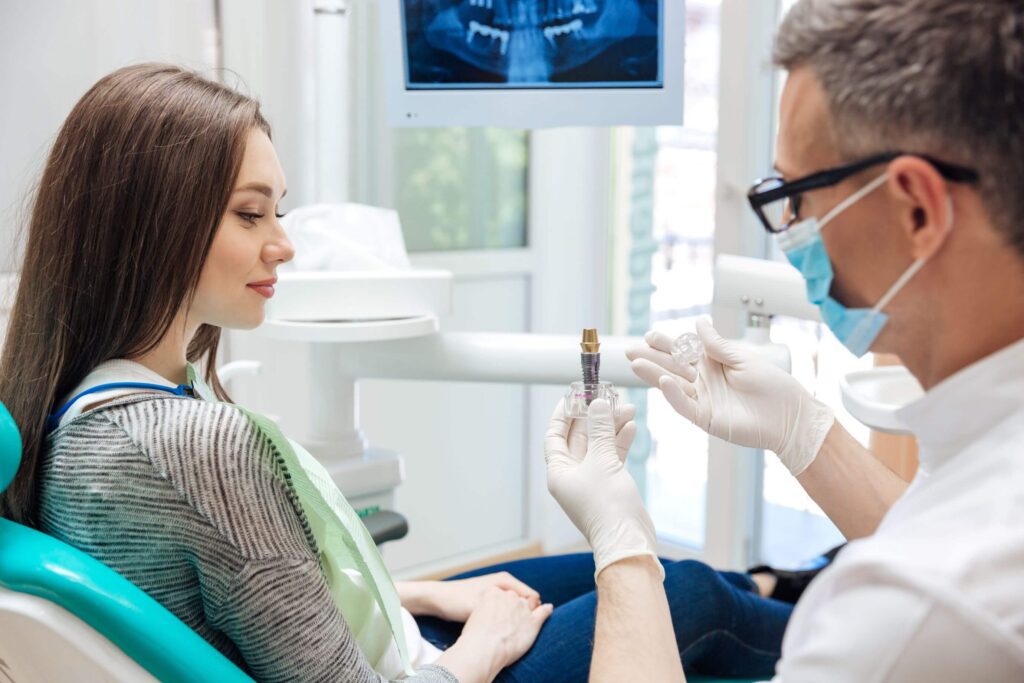
Dental implants are widely considered the gold standard for replacing missing teeth because they restore both the visible tooth and its underlying root structure. An implant consists of a small titanium post that is surgically placed into the jawbone, where it gradually fuses with the bone through a natural process called osseointegration. Once healing is complete, a custom restoration is securely attached to the implant.
Compared with traditional tooth replacement options, implants offer several important advantages, including:
- Exceptional stability and comfort
- Preservation of jawbone density
- Improved chewing strength
- A natural appearance and feel
- Long-term durability with proper maintenance
- No need to alter adjacent healthy teeth
Not every patient is an immediate candidate for implants, but a prosthodontist can determine whether additional procedures may help prepare your mouth for implant placement.
Veneers
Although veneers are often associated with cosmetic dentistry, they also play an important role in prosthodontics for selected patients. Veneers are thin porcelain or ceramic shells bonded to the front surfaces of teeth to improve their appearance while maintaining as much natural tooth structure as possible.
Veneers may be recommended to address:
- Chipped teeth
- Worn enamel
- Minor gaps between teeth
- Irregular tooth shape
- Persistent discoloration that doesn’t respond to whitening
Because every veneer is individually crafted, prosthodontists carefully match the color, shape, and proportions of your surrounding teeth to create a balanced, natural-looking smile.
Full-Mouth Reconstruction
For patients with extensive dental damage or multiple oral health concerns, a full-mouth reconstruction may provide the most comprehensive solution. Rather than focusing on one tooth at a time, this personalized treatment approach restores the health, function, and appearance of the entire mouth.
A full-mouth reconstruction may combine several prosthodontic procedures, including:
- Dental implants
- Crowns
- Bridges
- Veneers
- Dentures
- Bite rehabilitation
- Replacement of failing restorations
Treatment plans are customized based on each patient’s oral health, goals, and lifestyle, often requiring coordination with specialists such as oral surgeons, periodontists, orthodontists, or endodontists. The result is a healthier, more functional smile that is designed for long-term stability and comfort.
Maxillofacial Prosthetics
Some prosthodontists receive additional training in maxillofacial prosthetics, a highly specialized area focused on restoring oral and facial structures affected by congenital conditions, trauma, or diseases such as oral cancer.
These custom prosthetic devices may help restore:
- Portions of the jaw or palate
- Facial structures affected by surgery
- Speech and swallowing function
- Overall facial symmetry and appearance
For many patients, maxillofacial prosthetics play an essential role in improving both function and quality of life following complex medical treatment.
The Prosthodontic Treatment Process
While every patient’s journey is unique, the prosthodontic treatment process typically follows these key stages.
Step 1: Comprehensive Consultation and Examination
Your first appointment is focused on evaluating your overall oral health and determining the best path forward. Rather than looking only at the affected teeth, a prosthodontist assesses how your teeth, gums, jaw, and bite work together to support a healthy smile. During this visit, your prosthodontist may:
- Review your medical and dental history
- Perform a comprehensive oral examination
- Evaluate existing crowns, bridges, fillings, or dentures
- Assess your bite and jaw alignment
- Examine your gums and supporting bone
- Discuss your concerns, symptoms, and smile goals
This thorough evaluation provides the foundation for a personalized treatment plan that addresses both immediate dental concerns and your long-term oral health.
Step 2: Advanced Digital Imaging and Diagnostics
Modern prosthodontics relies on advanced technology to improve precision and treatment outcomes. Depending on your needs, your prosthodontist may use several diagnostic tools to gather detailed information about your teeth and supporting structures.
These technologies may include:
- Digital dental X-rays
- Cone Beam Computed Tomography (CBCT) scans
- Intraoral digital scanners
- Digital photographs
- Bite analysis and occlusal evaluation
These tools allow your prosthodontist to evaluate bone quality, tooth structure, bite alignment, and surrounding tissues while creating highly accurate digital models of your smile. In many cases, digital impressions eliminate the need for traditional impression materials, making the process faster and more comfortable.
Step 3: Personalized Treatment Planning
After completing your examination and reviewing diagnostic images, your prosthodontist will create a treatment plan tailored specifically to your needs. If your care requires multiple procedures, your prosthodontist will explain the sequence of treatment, estimated timeline, expected outcomes, and maintenance requirements so you understand each step before treatment begins.
Step 4: Preparing Your Smile
Before placing your final restoration, certain preparatory procedures may be necessary to create a healthy, stable foundation. Depending on your treatment plan, this stage may include:
- Treating tooth decay
- Addressing gum disease
- Removing damaged or non-restorable teeth
- Performing root canal therapy when needed
- Preparing teeth for crowns or bridges
- Bone grafting to support future dental implants
- Coordinating care with other dental specialists
Taking time to establish a healthy oral environment helps improve the longevity and success of your prosthodontic treatment.
Step 5: Creating Custom Restorations
Using digital scans, detailed measurements, and precise shade matching, your prosthodontist works with a dental laboratory to fabricate restorations that are designed specifically for your smile.
Careful attention is given to every detail, including tooth shape, color, translucency, size, and bite alignment. The goal is to create restorations that not only function properly but also blend naturally with your existing teeth and facial features.
Step 6: Placement and Fine Tuning
Once your restoration is ready, your prosthodontist will carefully evaluate its fit, appearance, and function before permanently placing it. During this appointment, they will check:
- Comfort and overall fit
- Bite alignment
- Tooth contact during chewing
- Appearance and color match
- Gum tissue response
- Speech and overall function
Minor adjustments can often be made during the visit to ensure your restoration feels natural and functions comfortably.
Step 7: Long-Term Maintenance and Follow-Up Care
Successful prosthodontic treatment doesn’t end when your restoration is placed. Ongoing maintenance is essential for protecting your investment and supporting your long-term oral health. Your prosthodontist will recommend regular follow-up appointments to:
- Monitor the condition of your restorations
- Evaluate your bite and jaw function
- Check the health of your gums
- Professionally clean around restorations and implants
- Identify potential concerns before they become larger problems
Risks of Delaying Treatment
It’s not uncommon to postpone dental treatment, especially if a missing tooth isn’t causing pain or a damaged restoration still seems functional. However, many oral health problems gradually worsen over time, often leading to more complex and costly treatment in the future. Seeking care early can help preserve healthy teeth, maintain proper oral function, and improve the long-term success of restorative treatment.
While every patient’s situation is different, delaying prosthodontic care may increase the risk of the following complications:
- Progressive tooth movement
- Bone loss following tooth loss
- Increased wear on remaining teeth
- Difficulty chewing and speaking
- Changes in facial appearance
- Complications with existing restorations
- More complex treatment in the future
Caring for Your Dental Restorations
Just like natural teeth, crowns, bridges, dentures, veneers, and dental implants require consistent care to remain in excellent condition. Following your prosthodontist’s recommendations and maintaining good oral hygiene can help protect your investment, reduce the risk of complications, and keep your smile healthy for many years.
- Brush your teeth at least twice a day with a soft-bristled toothbrush
- Use fluoride toothpaste unless otherwise directed by your dentist
- Clean between teeth daily with dental floss, floss threaders, or interdental brushes
- Carefully clean around dental implants and bridges to remove plaque
- Gently brush your tongue to help reduce bacteria and freshen your breath
- Attend regular dental checkups
- Avoid chewing on ice, hard candy, or popcorn kernels
- Don’t use your teeth to open packages or bottles
- Limit biting directly into very hard foods when possible
- Wear an athletic mouthguard during contact sports
- Follow any dietary recommendations provided after treatment
- Eat a balanced diet rich in vitamins and minerals
- Limit sugary foods and beverages
- Drink plenty of water throughout the day
- Avoid tobacco products, which can increase the risk of gum disease and affect healing
- Manage health conditions, such as diabetes, that may influence oral health
If you wear dentures, remove and clean them daily using products specifically designed for dentures, and follow your prosthodontist’s instructions for overnight storage.
Rebuilding Confidence, Function, and Beauty
Your smile is one of your most important personal assets. It affects how you interact with others, how you feel about yourself, and even how you speak and eat. Prosthodontics empowers you to regain control over all these aspects of your life through personalized dental restoration.
If you’re ready to restore your teeth and renew your confidence, we invite you to schedule a consultation with our prosthodontic experts. Together, we’ll design a custom solution that revitalizes both the function and aesthetics of your smile — so you can live, laugh, and shine with complete confidence once again.