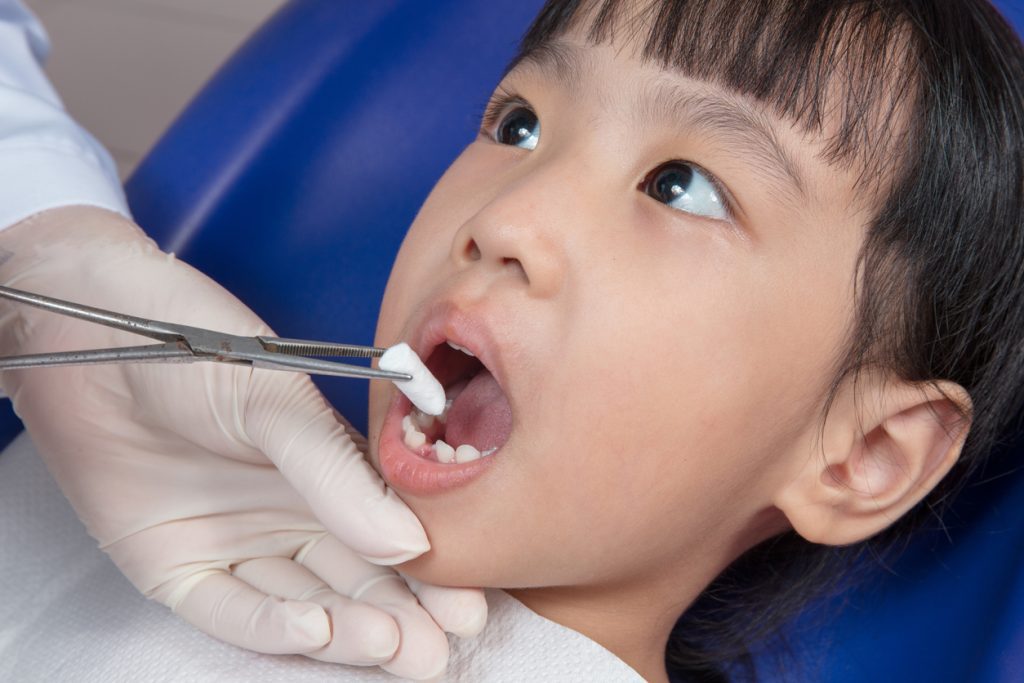
A pediatric tooth extraction in Raeford, North Carolina, is a clinical procedure where a primary or permanent tooth is removed to protect jaw health. Costs typically range from $150 to $400 per tooth, depending on whether the extraction is simple or requires sedation for your child’s comfort.
Factors that affect the cost of extractions
When you receive a quote for a pediatric tooth extraction at our office, the price is not arbitrary. In fact, the likelihood of a tooth extraction is influenced by cost, periodontal disease, and several clinical factors [1] (Warren et al., 2000). First is the position of the tooth. A simple extraction involves a fully erupted tooth, which is common for baby teeth. However, if a tooth is fractured below the gumline, a surgical approach is required. The number of roots also plays a role; back molars are more complex to remove than front incisors. Finally, an active infection can complicate the procedure, requiring a separate localized antibiotic treatment. By addressing these factors early, we ensure that families do not receive surprise fees during the appointment.
How to maximize insurance benefits with Medicaid and TRICARE
Many of our patients are military families stationed near Fort Liberty or local residents utilizing state benefits. Understanding how your specific plan handles extractions is important to lowering out-of-pocket costs. Under the TRICARE Dental Program, pediatric extractions are typically categorized as a basic restorative service, depending on your specific plan tier. For families using NC Medicaid, extractions for children under 21 are almost always fully covered when deemed medically necessary to prevent pain or infection. Our administrative team at Village Family Dental acts as your financial advocate. We handle all digital authorizations and paperwork with the North Carolina Department of Health and Human Services (NCDHHS) so you can focus entirely on your child’s recovery.
The use of sedation and its effect on the bill
One cost that parents often overlook is the fee for behavior management or sedation. Because a child’s safety is our primary concern, we do not want them to move during a surgical procedure. For mild anxiety, we use Nitrous Oxide, which is usually a flat-fee line item ranging from $50 to $100. Medical literature supports the use of oral conscious sedation by interprofessional team members in managing dental anxiety [2] (Bean et al., 2023). Many parents find this a vital investment because it ensures the child has a positive memory of the visit. For more complex surgical extractions or for children with significant dental phobias, IV sedation may be recommended. While this has a higher upfront cost, it often saves money in the long run by allowing the dentist to complete all necessary work in one visit rather than multiple high-stress appointments. We provide a full blueprint during your consultation to help you weigh the cost of sedation against your child’s specific needs.
Avoiding the cost after an extraction is performed
The price of a tooth extraction is only half the story; the real savings come after the tooth is gone. When a baby molar is removed prematurely, the surrounding teeth naturally tilt and shift into the open space. This drifting can block permanent teeth from erupting, leading to crowding and jaw misalignment. To prevent this, we often recommend a space maintainer. While this adds an initial cost to your treatment plan, the space maintainer is a high-value preventive tool. By holding that space open for the future adult tooth, you are effectively preventing the need for expensive, complex orthodontic braces or corrective jaw surgery once your child is older. We view the extraction-to-space-maintainer pipeline as the most cost-effective way to protect your child’s long-term oral health.
Table comparing pediatric extraction costs
| Extraction type | Typical cost | Recovery time | Long-term maintenance |
| Simple extraction | Low | 1-2 days | Low |
| Surgical extraction | Moderate | 3-5 days | Moderate |
| Emergency extraction | High | 2-3 days | High |
| Space maintainer | High | N/A | High |
Self-pay and financing options available at Village Family Dental
We recognize that parents may not always have a traditional PPO insurance plan. For our uninsured neighbors in the Rockfish and Raeford areas, we offer competitive self-pay rates significantly lower than those of a hospital-based oral surgeon. We provide an estimate before any tools are touched. To make these treatments even more accessible, our Raeford clinic utilizes CareCredit. This is a healthcare-specific credit card that lets you split your child’s extraction and follow-up care into monthly installments. Most Raeford families qualify for 6 to 12 months of interest-free financing, meaning you can get your child out of pain today and pay for the procedure over time without it impacting your monthly budget.
FAQs
1. How do I know if my child needs a simple or surgical extraction in Raeford?
Our dentists use digital X-rays at our Raeford Road office to see exactly where the tooth’s root sits. If the tooth is fully visible and the roots are straight, it is a simple extraction. If the tooth is trapped under the bone, it is classified as a surgical tooth.
2. Does insurance cover the cost of sedation during an extraction?
It depends on the plan. NC Medicaid often covers sedation for extractions if the child is under a certain age or has specific medical needs. TRICARE may cover it for surgical cases. We provide a full “Blueprint Conversation” before the procedure to explain your specific coverage.
3. Is it cheaper to just leave the decayed tooth until it falls out?
Actually, it is much more expensive. A decayed tooth can lead to a facial abscess (infection) that requires an emergency room visit or IV antibiotics. Additionally, losing a tooth too early without a space maintainer can lead to $5,000+ in orthodontic bills later.
References
[1] Bean T, Aruede G. Conscious Sedation in Dentistry. [Updated 2023 Apr 23]. In: StatPearls [Internet]. Treasure Island (FL): StatPearls Publishing; 2026 Jan-. Available from: https://www.ncbi.nlm.nih.gov/books/NBK592406/
[2] Warren, J. J., Hand, J. S., Levy, S. M., & Kirchner, H. L. (2000). Factors related to decisions to extract or retain at-risk teeth. Journal of public health dentistry, 60(1), 39–42. https://doi.org/10.1111/j.1752-7325.2000.tb03290.x