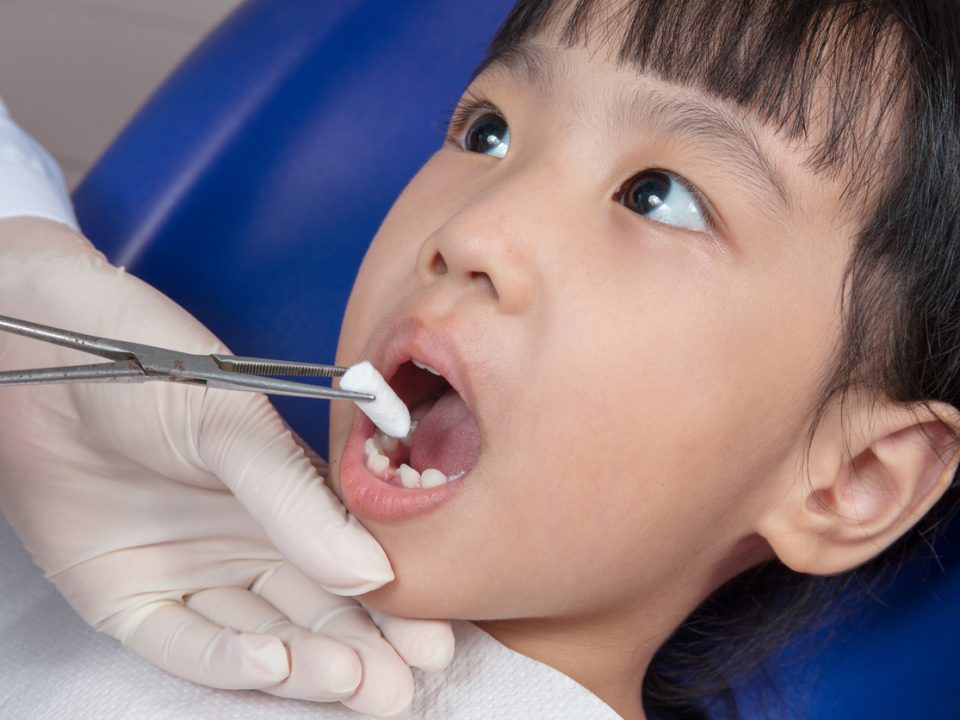
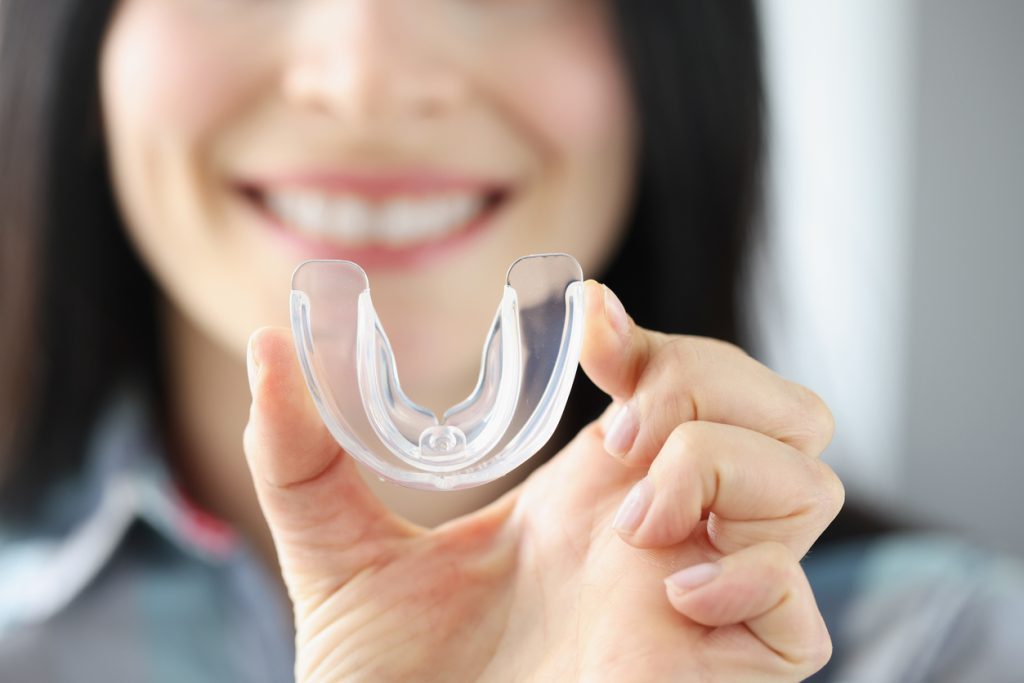
Custom mouthguards for youth athletes are professional-grade dental appliances formed over a precise model of a child’s teeth. Medical literature supports that custom mouthguards offer the highest possible safety without limiting the athlete’s functional impairment [1] (Averginos et al., 2024). Designed to provide superior shock absorption compared to store-bought versions, these guards protect the jaw, teeth, and soft tissues while allowing the athlete to breathe and speak clearly during competition.
How custom mouthguards protect your child
The primary medical role of a custom guard is to dissipate shock. High-performance materials such as ethylene-vinyl acetate (EVA) are used at our Laurinburg clinic to create a multi-layered barrier. When your child takes a hit to the chin or a stray elbow to the mouth, the custom guard disperses that force across the entire dental arch. Furthermore, a perfectly fitted guard stabilizes the temporomandibular joint (TMJ). By seating the jaw in a neutral position, the guard reduces the amount of force transmitted to the base of the skull, which many clinical studies suggest can help mitigate the severity of certain types of impact-related trauma.
Why your child should still have a mouthguard in non-contact sports
A common misconception among parents is that mouthguards are only for football or wrestling. However, clinical data from the American Dental Association shows that basketball actually has the highest rate of dental injuries among youth sports. In non-contact sports like soccer, volleyball, and baseball, injuries are often accidental but violent. Clinical evidence suggests that the incorporation of mouthguards in sports is strongly encouraged due to multiple benefits [2] (Wang et al., 2025). Because these athletes do not expect the hit, their muscles are not braced, often leading to more severe dental avulsions. At our Laurinburg office, we customize the guard thickness by sport. A basketball player might need a thinner, more breathable guard for constant running, while a lacrosse player requires a thicker, reinforced front shield to protect against high-velocity stick impacts.
When should you upgrade your child’s mouthguard?
Because children in North Carolina grow rapidly, a custom mouthguard is not a buy-it-once-and-forget-it item. As your child’s jaw expands and permanent teeth continue to erupt, the fit of a custom guard will naturally change. We recommend the six-month check for all our youth athletes. Bring the mouthguard to your routine dental cleaning at Village Family Dental. Our pediatric specialists will check for tight spots or areas where the guard is interfering with a new tooth’s path. Generally, a middle-school athlete will need a new custom guard every 12 to 18 months. While store-bought guards are often chewed through in weeks, a custom-fit guard maintains structural integrity much longer, but the biological growth of your child’s smile is the ultimate timer for a replacement.
How to manage braces and mouthguards
For parents, navigating orthodontics and sports simultaneously can feel like a logistical nightmare. You have invested thousands of dollars in your child’s braces; the last thing you want is for a sports injury to bend a wire or knock a bracket loose. Standard store-bought guards are dangerous for kids with braces because the boil-and-bite material can actually grip the brackets. If the guard is hit, the brackets can be sheared off the tooth. Our Laurinburg team designs orthodontic-specific custom guards. Clinical literature supports that during contact sports, patients in fixed appliances reported superior wearability for custom-made and mouth-formed mouthguards in comparison to pre-fabricated ones [3] (Kalra et al., 2022). These feature a unique internal channel that creates a buffer zone. This allows the teeth to continue moving into their correct positions under the guidance of the braces while providing a smooth, protective outer shell that prevents the lips and cheeks from being shredded.
Table comparing custom and store-bought mouthguards
| Feature | Store-bought | VFD custom mouthguard |
| Fit | Loose | Snug |
| Breathing | Obstructed | Optimized |
| Speech | Difficult | Clear |
| Protection level | Basic | Elite |
| Lifespan | 1 season | Multiple seasons |
Safety-first culture at Village Family Dental
At Village Family Dental, we see ourselves as part of the Laurinburg community fabric. From the youth leagues to the Friday night lights at the high school, our goal is to make professional mouth protection the standard. We encourage coaches and league directors in the Sandhills region to talk to us about Team Fitting Days. By bringing your athletes to a local, trusted provider rather than a high-volume chain in Fayetteville, you ensure that every child has access to the same level of safety. We provide your student-athletes with a durable carrying case and hygiene instructions to help them take ownership of their gear. This local connection prevents a guard from being lost or damaged the day before a big tournament.
FAQs
1. Does my child need a new mouthguard if they have braces?
Yes. Athletes with braces are at a higher risk because the metal brackets can lacerate the cheeks and lips during a hit.
2. How is a custom mouthpiece cleaned?
Rinse the mouthpiece with cool water and a mild soap after every use. Never use hot water, as it can warp the custom-fit material.
3. What is the best age to get a custom mouthguard?
Any child participating in contact sports should be evaluated once their permanent front teeth have erupted.
References
[1] Avgerinos, S., Stamos, A., Nanussi, A., Engels-Deutsch, M., Cantamessa, S., Dartevelle, J. L., Unamuno, E., Del Grosso, F., Fritsch, T., Crouzette, T., Striegel, M., Sánchez, C. C., Okshah, A., Tzimpoulas, N., Naka, O., Kouveliotis, G., Tzoutzas, I., Zoidis, P., Synodinos, F., Loizos, E., … Rahiotis, C. (2025). Position Statement and Recommendations for Custom-Made Sport Mouthguards. Dental traumatology : official publication of International Association for Dental Traumatology, 41(3), 246–251. https://doi.org/10.1111/edt.13019
[2] Wang, K., Liu, Y., Zhao, Z., Zhou, S., & Zhang, M. (2025). Mouthguard types, properties and influence on performance in sport activities: a narrative review. Frontiers in medicine, 12, 1527621. https://doi.org/10.3389/fmed.2025.1527621
[3] Kalra, A., Harrington, C., Minhas, G., Papageorgiou, S. N., & Cobourne, M. T. (2022). Wearability and preference of mouthguard during sport in patients undergoing orthodontic treatment with fixed appliances: a randomized clinical trial. European journal of orthodontics, 44(1), 101–109. https://doi.org/10.1093/ejo/cjab062