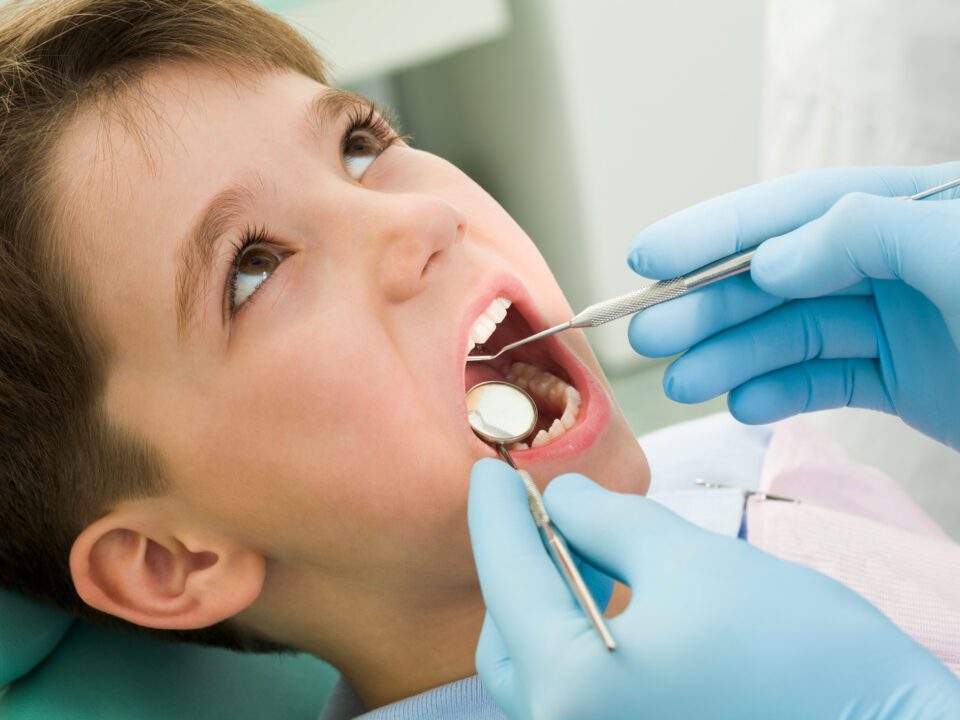

Nitrous oxide for toddlers is a safe, mild sedative used by our dentists at Village Family Dental to reduce anxiety and gag reflexes during treatment. Laughing gas is a blend of oxygen and nitrous oxide that your child inhales through a mask, allowing them to remain fully conscious and responsive while feeling relaxed.
Nitrous Oxide and the Interaction with a Child’s Developing System
Nitrous oxide is an inert gas, meaning the gas does not bind to enter the bloodstream in a way that affects internal organs over a long period of time. For a toddler in North Carolina, the safety profile is exceptionally high because the gas is eliminated from the body almost as quickly as it is inhaled. In particular, medical research supports that at clinical concentrations and durations, nitrous oxide does not appear to be associated with hematologic or neurobehavioral effects in the developing brain (Gupta et al., 2022). Unlike oral sedatives that must be processed by the liver or kidneys, nitrous oxide is simply exhaled through the lungs. At Village Family Dental, we use a “titration” method. This means our pediatric specialists adjust the concentration based on your child’s breathing rate. This precision ensures that your toddler receives the absolute minimum amount required to stay relaxed, making nitrous oxide a much safer alternative for young children.
Our Local Pediatric Safety Standards
In North Carolina, the administration of pediatric sedation is strictly regulated by the North Carolina State Board of Dental Examiners. Legal literature states that before a dentist can administer pediatric conscious sedation, the dentist shall obtain a general anesthesia permit (Cornell, 2017). Village Family Dental exceeds these state mandates by employing staff specifically trained in pediatric advanced life support (PALS) and utilizing hospital-grade monitoring equipment. When you bring your child to our Fayetteville office, you are not just getting a standard dental cleaning. You are accessing a facility designed for parents who demand the highest safety credentials. Our equipment features a fail-safe mechanism that ensures a minimum oxygen flow of 30% at all times, keeping your child’s oxygen saturation levels optimal throughout the procedure.
Preventing dental phobia
One of the greatest risks to a toddler’s oral health is not just a cavity but the development of a lifelong fear of the dentist. A traumatic experience at age three can lead to avoiding dental care for decades as an adult. Nitrous oxide acts as a buffer against fear. By using laughing gas, we create a positive memory imprint. Your child remains awake and can communicate with our team, but the mild euphoric effect prevents the fight-or-flight response from being triggered. This allows us to perform necessary treatments without the child associating the dentist with pain or panic. We are not just fixing a tooth; we are building a relationship with someone who will value their smile for the rest of their life.
Comparing pediatric sedation options:
| Feature | Nitrous oxide (Laughing Gas) | Oral conscious sedation | Anesthesia |
| Level of sedation | Mild | Moderate | Deep sleep |
| Administration | Inhaled mask | Liquid medicine | IV |
| Recovery | 3-5 minutes | 2-4 hours | 6-12 hours |
| Cost | Low | Moderate | High |
| Best for | Toddlers | High anxiety | Surgery |
Preparing for a pediatric dental appointment
Preparation is the key to a smooth sedation experience. For our Fayetteville families, we recommend a less-is-more approach on the morning of the appointment. While nitrous oxide rarely causes nausea, be sure that your toddler has only a light meal two hours before the visit. Avoid giving your child large amounts of dairy or heavy fats, as these stay in the stomach longer. We also suggest dressing your child in comfortable, loose-fitting clothing so our monitors can be placed easily. Most importantly, use friendly language when talking to your toddler.
Why nitrous oxide is ideal for toddlers
For pediatric dentistry in North Carolina, parents often choose between watchful waiting, nitrous oxide, or IV sedation. Watchful waiting can allow a small cavity to turn into a painful abscess, while IV sedation carries higher costs and longer recovery times. Nitrous oxide sits in the sweet spot of pediatric care. The American Academy of Pediatric Dentistry states that nitrous oxide is generally acceptable for children and can be titrated easily (AAPD, 2019). Laughing gas promotes cooperation more than holding a child still, but offers a much faster recovery than general anesthesia. Within five minutes of turning off the gas and administering pure oxygen, your toddler will be back to their normal, energetic self.
FAQs
1. Is my toddler too young for laughing gas?
Most toddlers who can comfortably wear a small nose mask are candidates for nitrous oxide. Our Fayetteville pediatric specialists evaluate each child’s developmental stage to ensure it is the right fit.
2. Will my child feel sick after the dental appointment?
Nausea is rare but can happen if a child has a very full stomach. We recommend a light meal a few hours before your appointment at our Fayetteville office to ensure you are fully comfortable.
3. Can I stay with my toddler during sedation?
Yes! We encourage parents to stay close. Your presence, combined with the gas’s calming effects, helps ensure a positive “Expert Friend” environment for your child.
References
Gupta, N., Gupta, A., & Narayanan M R, V. (2022). Current status of nitrous oxide use in pediatric patients. World journal of clinical pediatrics, 11(2), 93–104. https://doi.org/10.5409/wjcp.v11.i2.93
Cornell. (2017). 21 N.C. Admin. Code 16Q .0404 – CREDENTIALS AND PERMITS FOR MODERATE PEDIATRIC CONSCIOUS SEDATION. LII / Legal Information Institute. https://www.law.cornell.edu/regulations/north-carolina/21-N-C-Admin-Code-16Q-0404
AAPD. (2019). Overview. Aapd.org. https://pre-prod.aapd.org/research/oral-health-policies–recommendations/use-of-nitrous-oxide-for-pediatric-dental-patients/