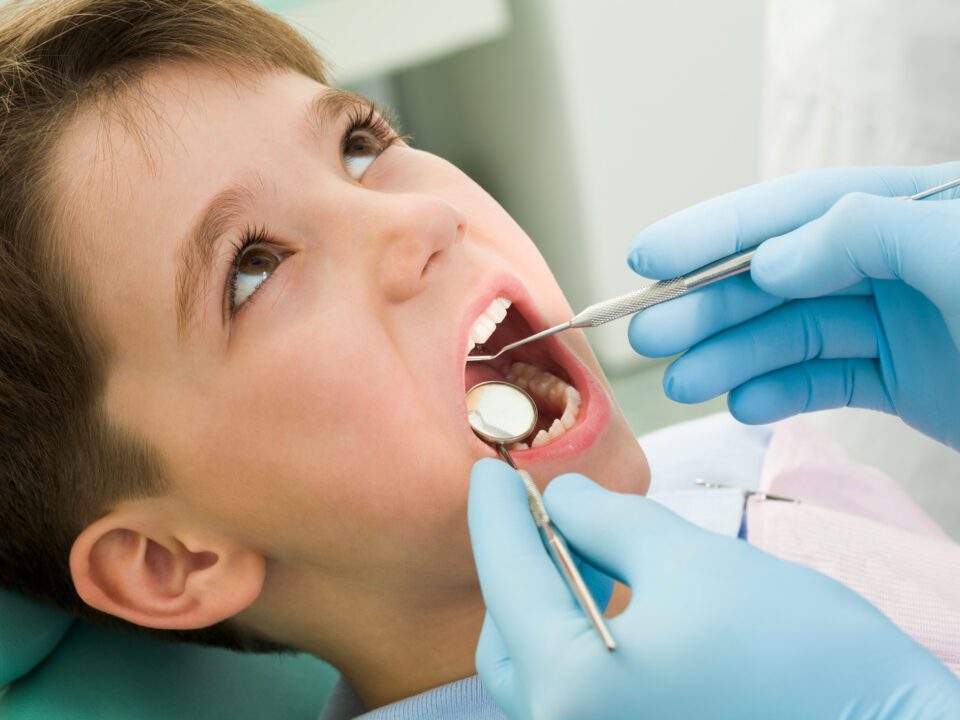

Oral conscious sedation for children is a needle-free pharmacological method used by pediatric dentists to help young patients remain calm and cooperative during dental procedures. Administered typically as a liquid medication, it induces a state of deep relaxation while allowing the child to remain awake, responsive, and able to breathe on their own.
North Carolina’s Strict Sedation Standards
In North Carolina, the State Board of Dental Examiners maintains some of the highest safety standards in the country for pediatric sedation. The State Board of Dental Examiners states that dentists administering anesthesia or sedation in the dental office must comply with the board’s statutes (NC dental board, n.d.). At Village Family Dental, our clinicians hold specialized permits that require advanced training in airway management and emergency response. During the procedure, your child is never left alone. We use continuous vital signs monitoring, which includes a pulse oximeter to track oxygen saturation and heart rate. This data-driven approach allows our team to ensure your child is responding well to the medication, giving you the peace of mind you deserve.
Why Oral Sedation Prevents Dental Phobia
One significant benefit of oral conscious sedation is the amnestic effect. Clinical research suggests that oral sedation allows patients to visit the dentist in a less-stressed state, in which fear and anxiety would otherwise impede treatment (Donaldson et al., 2007). While your child is technically awake and able to follow simple instructions, the medication often prevents the brain from forming short-term memories of the sights and sounds of the dental work. By using oral sedation, we are not just fixing a cavity today; we are protecting your child’s future relationship with the dentist. Because they do not remember the handpiece vibration or the treatment pressure, they do not develop the fear cycle that leads to adult dental avoidance.
Is Your Child a Candidate for Sedation?
Oral conscious sedation is ideal for helping anxious children. This sedation method is also a practical tool for several other clinical situations. You might consider this option if your child:
- Has Hyperactive Gag Reflex: Some children physically cannot tolerate tools in their mouth without gagging; sedation relaxes these muscles.
- Requires Quadrant Dentistry: If your child needs multiple fillings or crowns, sedation allows us to complete all the work in a single, longer appointment rather than four short, stressful ones.
- Has Special Healthcare Needs: For children with sensory processing sensitivities or physical disabilities that make sitting still difficult, oral sedation provides a comfortable, dignified way to receive care.
Prepping the night before dental sedation
Preparation is the key to a successful sedation appointment. To ensure the medication is properly and safely absorbed, we ask parents to implement a strict oral protocol:
- Midnight Cutoff: No solid foods or milk after midnight the night before the appointment.
- Clear Liquids: You may offer clear liquids up to 2 hours before you arrive at our North Carolina office, but nothing after that.
- The Comfort Item: We encourage you to bring your child’s favorite blanket or a stuffed animal from home. Having a familiar scent and texture helps the sedative transition feel like a natural part of the bedtime routine.
Comparing sedation options for children:
| Sedation type | Best for | Recovery time | The feel |
| Nitrous oxide | Mild anxiety | Immediate | Relaxed |
| Oral sedation | Moderate | 2-4 hours | Drowsy |
| IV sedation | Oral surgery | 4-6 hours | Deep relaxation |
Sedation recovery at home
Once the appointment is over, the sedative will still be in your child’s system for several hours. The medical literature supports monitoring the patient in recovery until they are deemed safe to leave (Bean et al., 2023). As you drive back to your neighborhood in Hope Mills or Fayetteville, your child will likely be very drowsy and may have weakness in the lower extremities. For the first four hours at home, keep your child on the couch or a low bed where they cannot fall. Focus on hydration first, then move to soft foods like yogurt or applesauce. We recommend monitoring them closely until they can walk steadily without help. If they want to nap, ensure they are positioned on their side to keep their airway clear.
FAQs
1. Can children get oral conscious sedation in Hope Mills?
Yes. Village Family Dental offers specialized pediatric oral conscious sedation at our Hope Mills location. Our providers are specifically trained and authorized by the North Carolina State Board of Dental Examiners to safely administer these medications to minors.
2. Will my child be “knocked out” during the procedure?
No. Unlike general anesthesia used in hospitals, oral conscious sedation keeps your child awake. They may drift off into a light sleep, but they can be easily awakened with a gentle touch or a spoken word.
3. Is oral sedation safer than IV sedation for toddlers?
For many children, oral sedation is a preferred “first step” because it is non-invasive. However, safety depends on the child’s medical history. We perform a comprehensive health screening for every North Carolina patient before recommending any sedation level.
References
NC dental board. (n.d.). North Carolina State Board of Dental Examiners. Www.ncdentalboard.org. https://www.ncdentalboard.org/anesthesia.htm
Donaldson, M., Gizzarelli, G., & Chanpong, B. (2007). Oral sedation: a primer on anxiolysis for the adult patient. Anesthesia progress, 54(3), 118–129. https://doi.org/10.2344/0003-3006(2007)54[118:OSAPOA]2.0.CO;2
Bean T, Aruede G. Conscious Sedation in Dentistry. [Updated 2023 Apr 23]. In: StatPearls [Internet]. Treasure Island (FL): StatPearls Publishing; 2026 Jan-. Available from: https://www.ncbi.nlm.nih.gov/books/NBK592406/