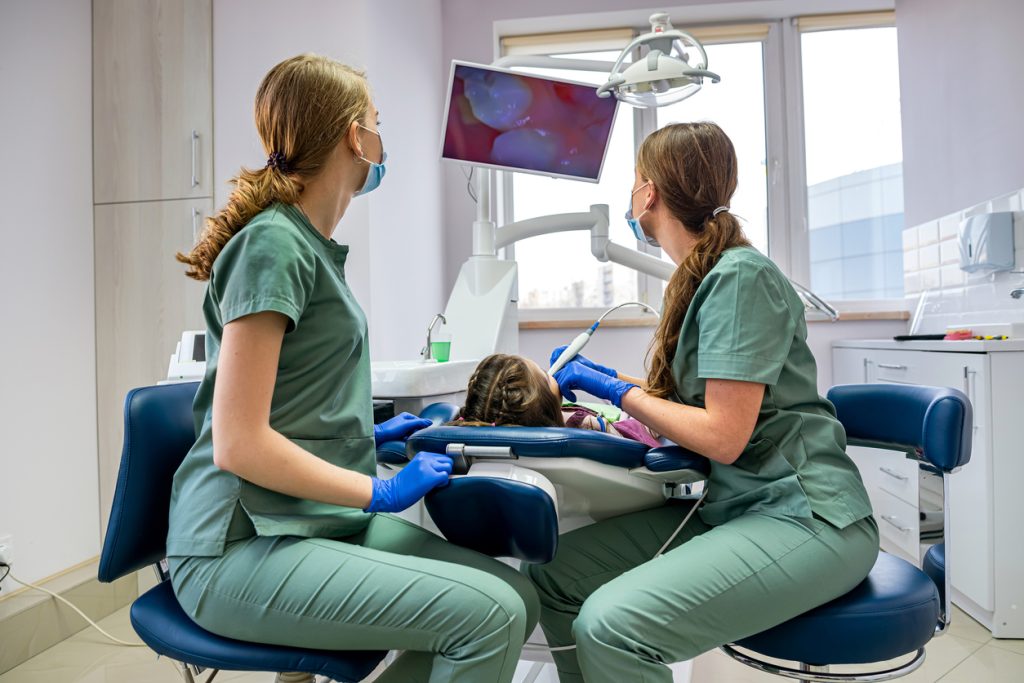
Most children can safely return to school in the morning after dental sedation, provided they have regained full motor control and are eating normally. At Village Family Dental, we recommend a strict 24-hour observation before resuming high-impact sports, school, or daycare to ensure the sedative has completely cleared the system.
Daily medications and sedation
One of the most common concerns for parents in the Fayetteville area is how sedation interacts with a child’s existing medication. If your child takes daily stimulants for ADHD or utilizes a rescue inhaler for asthma, the 24-hour recovery window requires careful coordination. Most daily medications can be resumed as soon as your child can tolerate clear liquids and a light snack. However, for children on ADHD medication, you may notice they are slightly more sensitive to the come-down of the sedative. We recommend having your child’s rescue inhaler on hand during the first six hours at home while they transition back to normal breathing patterns. If you have questions about specific drug-to-drug interactions, our Raeford and Hope Mills teams are happy to coordinate directly with your local North Carolina pharmacist to ensure a seamless medication schedule.
What should be my child’s first meal after sedation?
Prior to sedation, our doctors typically advise perioperative fasting. Clinical evidence supports that mandatory fasting is a safety precaution to prevent aspiration [1] (Toms et al., 2019). This can leave children severely hungry after the procedure. While soft foods are the standard recommendation, the way you reintroduce nutrition can help prevent postoperative nausea. After a visit to our St. Paul’s or Lumberton clinics, focus on using clear liquids. If your child can sip water or apple juice for 30 minutes without feeling sick, you can move to room-temperature soft foods. Avoid using straws for at least 24 hours, especially if a tooth was extracted, to prevent dry socket. Instead, opt for grits, yogurt, or mashed sweet potatoes. Avoid high-acid foods like orange juice and spicy seasonings on the first day, as they can sting sensitive gum tissue that is still recalibrating after the local anesthetic.
Logistics for your child’s sedation
For our families stationed at Fort Liberty, we understand that recovery often happens while one parent is deployed or on duty. If you are managing a post-sedation recovery on your own, preparation is important. We recommend picking up any necessary soft foods or over-the-counter children’s Tylenol before the appointment, so you do not have to stop at the commissary with a drowsy child in the car. If you have a Permanent Change of Station (PCS) move scheduled shortly after a sedation appointment, let our front desk know. We can provide a travel clearance letter and a digital copy of the treatment notes, ensuring that if you need a follow-up at your next duty station, the new provider has the exact dosage and sedation records needed to continue care.
Table comparing the recovery levels for each sedation type:
| Sedation type | School return | Sports | Coordination recovery |
| Nitrous oxide | Immediate | Same day | 5-10 minutes |
| Oral conscious | Next day | 24 hours | 4-6 hours |
| IV sedation | Next day | 24-48 hours | 6-12 hours |
| General anesthesia | 24-48 hours | 48 hours | 12-24 hours |
What is Paradoxical Vocalization
Paradoxical vocalization is not usually a sign of pain, but rather the brain’s way of processing the medication as it leaves the system. Your child might not recognize their surroundings immediately or may feel frustrated by the tingling sensation in their mouth. Clinical literature supports the view that paradoxical reactions have low prevalence and are not life-threatening [2] (Moon et al., 2013). For parents in the Cumberland County area, the best remedy is a low-stimulus environment. Turn off the bright overhead lights, put away the noisy toys, and provide a weighted blanket or a favorite plushie. Most of this irritability fades within 60 to 90 minutes as the child drifts into a natural, restful sleep.
What to notify a babysitter after sedation
If you are a working parent and need to hand off care to a grandparent, nanny, or daycare provider the morning after sedation, clear communication is vital. Even if the child seems 100% back to normal, the lingering effects of deeper sedatives can occasionally cause a “mid-morning slump” in energy. Provide your caregiver with a simple three-point checklist:
- Activity Level: No climbing on playground equipment or bike riding for the remainder of the 24-hour window.
- Dietary Needs: Remind them to encourage water intake and to avoid crunchy snacks like chips or hard crackers that could poke at healing gums.
- Emergency Contact: Ensure they have the direct number for Village Family Dental and know to call us if the child experiences any unusual swelling or persistent vomiting.
FAQs
1. Can my child take the school bus the morning after sedation?
If your child was sedated yesterday and is walking steadily and eating normally this morning, they are safe to ride the bus. However, if they still seem unusually sleepy or “clingy,” we recommend a car ride to school so you can personally monitor their alertness.
2. What should I tell my child’s teacher or daycare provider?
Inform them that your child had a dental procedure under sedation. Provide a note asking the teacher to monitor for any unusual sleepiness and to allow the child to have extra water. It’s also wise to ask them to skip recess or PE on that first day back.
3. What if my child has a sports game in Fayetteville the evening of the procedure?
If your child received Oral or IV sedation, they must sit out the game. Coordination is the last thing to fully return to 100%, and the risk of a sports-related injury is significantly higher during the first 24 hours.
References
[1] Toms, A. S., & Rai, E. (2019). Operative fasting guidelines and postoperative feeding in paediatric anaesthesia-current concepts. Indian journal of anaesthesia, 63(9), 707–712. https://doi.org/10.4103/ija.IJA_484_19
[2] Moon Y. E. (2013). Paradoxical reaction to midazolam in children. Korean journal of anesthesiology, 65(1), 2–3. https://doi.org/10.4097/kjae.2013.65.1.2